Serving Terre Haute, IN and surrounding areas. (812) 251-0473
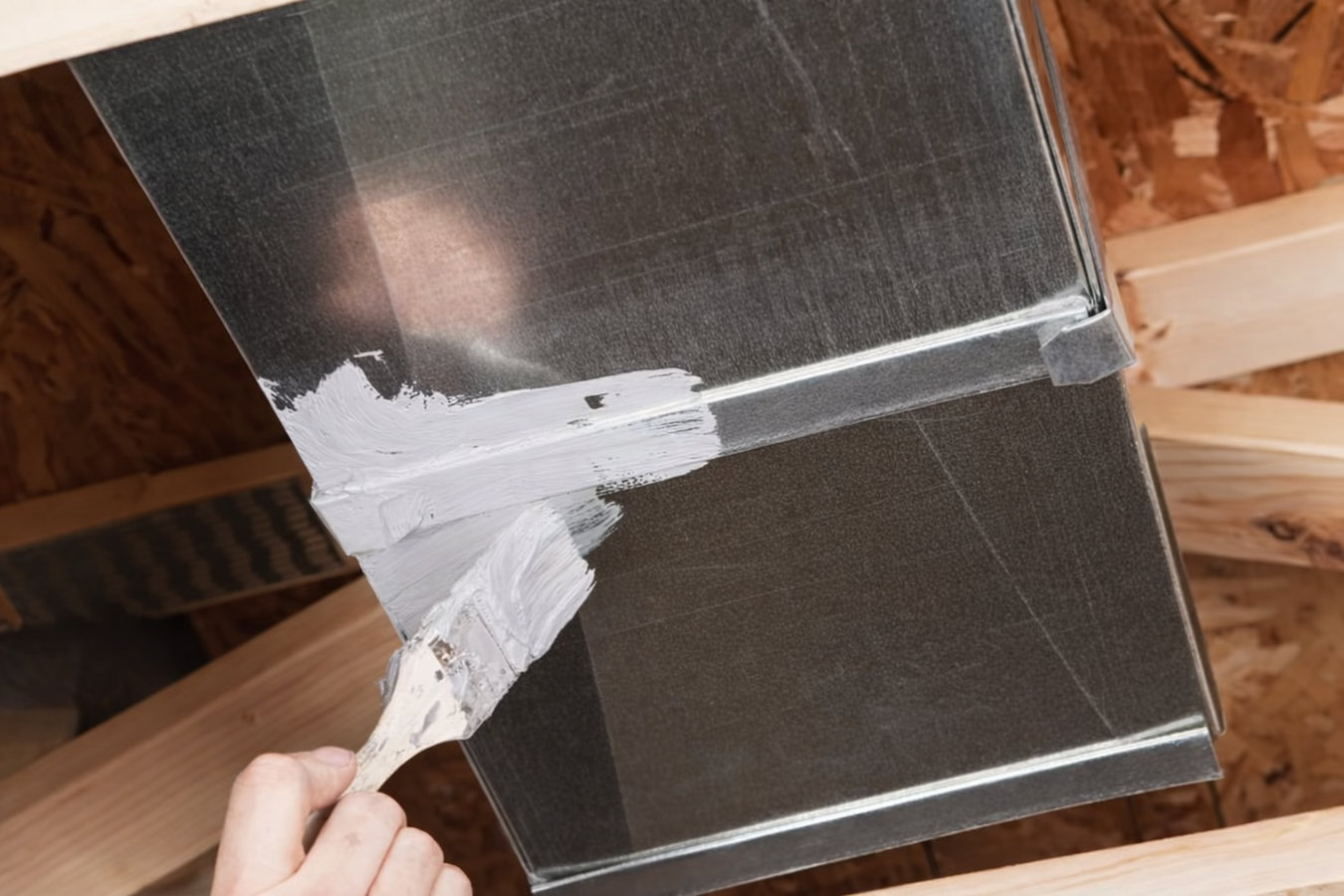
Hidden gaps in your attic, basement, and walls are letting conditioned air escape all year. We find and seal them so your home holds its temperature and your bills stop climbing.
Air sealing in Terre Haute means finding and closing the gaps, cracks, and openings where outside air sneaks in and conditioned air leaks out - most jobs for a standard home are completed in one to two days, and you can stay home while the work is done.
These gaps are not always visible. They hide behind walls, under floors, and in your attic - often where pipes and wires pass through framing - and together they can act like leaving a window open all year. The U.S. Department of Energy estimates that air leaks account for 25 to 40 percent of the energy used to heat and cool a typical home. In Terre Haute, where winters are genuinely cold and summers are hot and humid, that loss shows up on your bill every month.
Air sealing works best when combined with proper insulation. If you are also considering attic air sealing, that is often the first place we start - the attic floor is typically the single largest source of air loss in an older home. Sealing there before adding insulation delivers the best result.
If your gas bill climbs sharply during the coldest weeks of a Terre Haute winter - even without changing your thermostat - air leakage is a likely reason. Heat escapes through gaps faster than your furnace replaces it, so the system runs longer and costs more. This pattern is one of the clearest signs your home's envelope needs attention.
In many older Terre Haute homes with crawl spaces or unfinished basements, cold air migrates up through the floor framing and makes the first floor uncomfortable all winter. If you find yourself wearing thick socks indoors or avoiding certain rooms in January, air coming in from below is almost certainly the cause - not a furnace issue.
Hold your hand near an electrical outlet or light switch on an exterior wall on a cold day. If you feel cool air, that outlet is connected to a gap in the wall cavity running to the outside. This is extremely common in pre-1980 homes and is one of the easiest problems for a contractor to fix.
If a bedroom is always stuffy in summer and freezing in winter while the rest of the house feels fine, uneven air leakage is often the cause. Gaps near that room let outside air in and conditioned air out at a higher rate. Air sealing those specific areas can make a noticeable difference without touching your HVAC system.
We treat your home as a system, not a collection of separate problems. That means we assess the whole house - attic floor, basement rim joist, crawl space, and interior penetrations - before deciding where to focus. Foam, caulk, and weatherstripping are applied to seal openings based on location and gap size. We also offer attic air sealing as a standalone service for homeowners whose biggest loss point is the ceiling plane above the living area.
For the best results, we recommend pairing air sealing with basement insulation in homes with unfinished basements or rim joist exposure. Sealing and insulating the basement together closes two of the largest pathways for cold air in a Terre Haute home in one visit.
Best for homeowners who want a comprehensive assessment and seal of every major leak point in the house.
Targeted for homes where the attic floor is the primary source of heat loss - often paired with new attic insulation.
Ideal for homes with crawl spaces or unfinished basements where cold air is rising into the living area.
Closes penetrations around outlets, pipes, and window frames in older homes where these points have never been addressed.
Vigo County has a significant share of homes built before 1980 - many of them in the decades before air barriers were a building priority. Homes from that era were constructed with gaps around framing, pipes, and electrical boxes simply left open. If your home was built before 1980 and has never had air sealing work done, there is a very good chance it has substantial leakage that has never been addressed. Terre Haute's climate makes that problem expensive in both seasons - January lows in the mid-teens mean your furnace works against the cold for months, and summer humidity means your air conditioner fights outdoor heat well into September.
We serve homeowners across the region, including Washington, IN and Vincennes, IN. Older homes across this part of Indiana share the same construction era and the same climate pressures, and our approach is the same regardless of zip code: assess the full envelope, seal what is leaking, and verify the improvement.
We ask a few basic questions - home age, approximate square footage, whether you have a basement or crawl space - and schedule a visit. We respond within 1 business day. There is no cost for the assessment.
We walk through your home paying close attention to the attic, basement, and any crawl spaces. Many jobs include a blower door test, which temporarily depressurizes the house to measure how leaky it is. Make sure attic hatches and basement access points are clear.
After the assessment you receive a written estimate outlining where work will be done, what materials will be used, and the total cost. We will note whether the work qualifies for the federal tax credit or any utility rebates currently available in Indiana.
The crew works through identified areas - typically starting in the attic, then moving to the basement or crawl space, and finishing interior gaps. Most standard-size homes are done in one day. If a blower door test was done at the start, a follow-up test confirms the improvement before we leave.
We respond within 1 business day. There is no obligation to proceed after your estimate. Once you submit, someone from our office will call to schedule a free on-site assessment at a time that works for you.
(812) 251-0473Most of the air loss in a home is not around windows and doors - it is in the attic floor, basement rim joist, and interior penetrations that most contractors overlook. We assess all of these areas before deciding where to work, so you are not paying for a partial fix.
A before-and-after blower door test gives you a concrete number showing how much leakage your home had and how much was reduced. It is the only way to verify the work actually made a difference - and we offer it as part of our process.
We work across Vigo County and beyond - from Terre Haute to communities throughout western Indiana and eastern Illinois. Our process and pricing do not change based on your zip code.
The Inflation Reduction Act created a federal tax credit covering 30% of qualifying air sealing costs, up to $1,200 per year. We walk you through what qualifies and provide the documentation you will need at tax time - so you do not miss out on a benefit you have already earned.
Air sealing is not a product - it is a process, and the quality of the result depends entirely on how thoroughly the contractor assesses and addresses the whole house. That is what we hold ourselves to on every job. For more on what qualifies for the federal energy credit, see the IRS Energy Efficient Home Improvement Credit guidance. You can also review the ENERGY STAR seal and insulate resources for an overview of how air sealing and insulation work together.
Insulating the basement walls and rim joist stops cold air from rising through the floor and keeps the whole first floor more comfortable.
Learn moreTargeted sealing of the attic floor is the single highest-impact step for homes where heat is escaping through the ceiling plane.
Learn moreCall today to schedule your free air sealing assessment - the sooner we seal your home, the sooner you stop losing money through cracks in every season.