Serving Terre Haute, IN and surrounding areas. (812) 251-0473
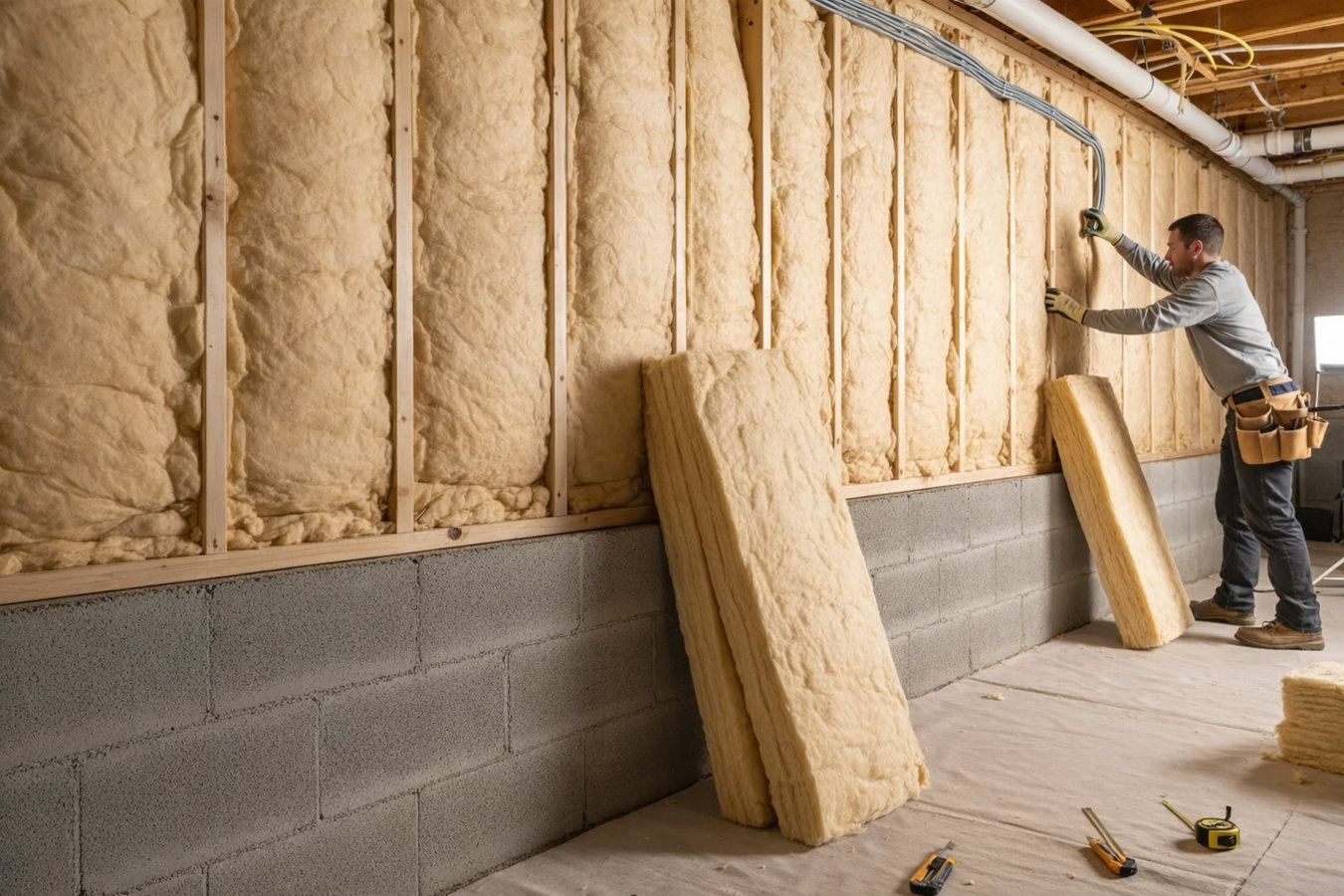
Cold floors and high gas bills often trace back to an uninsulated basement. We insulate foundation walls and ceilings in Terre Haute homes so your whole house holds heat the way it should.
Basement insulation in Terre Haute creates a thermal barrier along your foundation walls and ceiling that stops heat from escaping - most residential jobs on a standard single-family basement are completed in one to two days. Contractors can insulate the basement walls, the ceiling above the basement, or both, depending on how you use the space and where your heat is going. The right approach depends on the age of your home, whether the basement is finished, and whether moisture is a factor.
A large share of Terre Haute homes were built before modern insulation standards existed - many in established neighborhoods like the Near Northside and Farrington Grove have bare concrete or block foundation walls with no insulation at all. If you are starting from scratch, the improvement in both comfort and energy costs is typically dramatic and noticeable within the first heating season. Many homeowners also benefit from pairing basement work with closed-cell foam insulation, which provides both insulation and a moisture barrier in one application.
The U.S. Department of Energy recommends insulating basement walls as one of the highest-return improvements in cold-climate homes - which puts Terre Haute squarely in the priority zone for any homeowner dealing with cold floors and high heating bills.
If the floors in your kitchen or living room feel cold underfoot during a Terre Haute winter - even when the furnace is running - heat is likely escaping through an under-insulated basement. This is one of the most common complaints from homeowners in older Vigo County neighborhoods.
Turning up the thermostat does not fix the root problem - it just raises your gas bill.
If you walk into your basement and the walls are raw concrete or cinder block with nothing on them, you have no insulation. This is extremely common in Terre Haute homes built before 1980, and it means your foundation is acting like a giant heat sink all winter long.
An uninsulated foundation wall loses heat continuously until it is addressed.
The clay-heavy soil around Terre Haute holds water, and basements in lower-lying areas of the city can get damp after hard rain or spring snowmelt. A musty smell or water stains on the walls mean the space needs attention before insulation goes in.
Insulating over a moisture problem traps it in - mold follows quickly.
Terre Haute winters are long and cold, and natural gas heating costs climb fast when a basement is losing heat. If your bills seem higher than they should be for the size of your home, the basement is often where the heat is going.
An under-insulated basement forces your furnace to run longer every cycle.
We insulate basement walls, basement ceilings, and rim joists - the three areas where most heat leaves a Terre Haute foundation. For older homes with block or poured-concrete walls that have never been insulated, we typically recommend closed-cell spray foam because it seals air leaks and blocks moisture at the same time. For basement ceilings above utility-only spaces, rolled batt insulation often does the job at a lower cost. The right choice depends on your specific basement layout and how it is used.
If your basement has existing insulation that is damaged, moldy, or has fallen away from the wall, that material needs to come out before new insulation goes in. We handle removal when required so the new installation starts with a clean, dry substrate. For homeowners also dealing with a damp crawl space nearby, crawl space insulation is often the right companion service to address both problem areas at once.
Best for homes with bare foundation walls where the basement is used as living or storage space.
Best for utility-only basements where keeping the ground floor warm is the priority.
Targets the overlooked band of wood at the top of the foundation wall - a major air leakage point in older homes.
Best for older block or poured-concrete foundations where air sealing and moisture resistance are both needed.
Terre Haute winters regularly push temperatures into the single digits, and the Wabash River valley soil is clay-heavy - meaning it holds water long after rain and snowmelt. Basements here deal with both intense cold and seasonal moisture pressure, which makes proper insulation and moisture management more critical than in drier parts of the country. Many homes in the city were built in the 1940s through 1970s, a period when basement insulation was minimal or nonexistent by current standards. That means most older Terre Haute homes are starting from scratch rather than upgrading - and the improvement in comfort and efficiency is proportionally larger.
We serve homeowners across the region, including Vincennes, IN and Linton, IN, where older housing stock and cold winters create the same basement insulation challenges found throughout western Indiana. Indiana follows a statewide residential energy code that sets minimum insulation requirements, and a contractor doing the job right will ensure your project meets those standards - which matters when you sell the home or file an insurance claim.
We respond within 1 business day. Tell us your basement size and whether you have had any moisture issues. No technical knowledge needed - we ask the right questions.
We walk through your basement, check the walls, ceiling, and any signs of moisture, and tell you what needs to happen before a single piece of insulation goes in.
You get a clear written quote. We confirm whether the City of Terre Haute requires a permit for your job and pull it on your behalf if so - no guesswork on your end.
Most standard basement jobs are done in one to two days. Before we leave, we walk you through the finished work so you can see exactly what was done and ask questions.
Free estimate, written quote, no pressure. We respond within 1 business day.
(812) 251-0473A large share of Terre Haute homes were built between the 1940s and 1970s, with bare foundation walls and no basement insulation at all. We have worked in these homes throughout the city and know what to expect in older construction throughout Vigo County.
Terre Haute clay soil and the Wabash River valley mean basement moisture is a real risk here. We inspect for water intrusion before recommending any insulation approach, because installing over a wet wall makes the problem worse - not better.
We confirm permit requirements with the City of Terre Haute for every project and pull any required permits before work starts. That means the work is officially on record - which matters when you sell your home.
You get a written quote broken down by material and labor before any scheduling happens. No surprises after the work is done, and no pressure to decide on the spot.
We know the older housing stock in Terre Haute and treat every basement like it matters - because for the homeowner living above it, it does. Our process is designed to give you a clear picture before any work starts and a finished job you can verify with your own eyes.
More guidance on basement insulation requirements is available from the Indiana Department of Homeland Security Building Codes division.
The dense, moisture-resistant foam choice for basement walls, rim joists, and any foundation area prone to seasonal dampness.
Learn moreSeal the ground-level space under your home to stop cold air, moisture, and pests from reaching your living floors.
Learn moreTerre Haute winters do not wait - lock in your installation date before the cold sets in and the schedule fills up.