Serving Terre Haute, IN and surrounding areas. (812) 251-0473
A poorly insulated commercial building costs you money every month and fights your HVAC system in both winter and summer. We install commercial insulation that meets Indiana code and makes a real difference on your energy costs.
Commercial insulation in Terre Haute slows heat movement through your building's walls, roof, and floors - keeping hot air out in summer and warm air in during winter. The result is a more comfortable space for your employees and customers, and lower energy costs year-round. Most commercial jobs in a standard-sized building are completed in one to three days with minimal disruption to daily operations.
A significant portion of Terre Haute's commercial buildings were constructed before modern energy codes took effect. Buildings from that era were often built with little or no wall insulation, and whatever was installed has had decades to settle, shift, or absorb moisture. If your building is more than 20 years old and has never had an insulation assessment, there is a real chance it is running well below current standards. Pairing commercial insulation with spray foam insulation in areas that need a complete air and moisture seal - like roof assemblies and rim joists - delivers the best overall building performance.
Indiana's energy code sets minimum insulation requirements for commercial buildings, and permitted work in Terre Haute has to meet those standards before an inspector signs off. The ENERGY STAR Commercial Buildings program offers benchmarking tools that help business owners understand how their building compares to similar properties - a useful reference before you schedule an assessment.
If your energy costs have gone up noticeably over the past year or two but your usage has not changed, degraded insulation is one of the first things to investigate. In Terre Haute's climate, a building that is losing heat in January or gaining it in July is working its HVAC system much harder than it should.
That extra HVAC load shows up directly on your Duke Energy bill every month.
If one part of your building is always too hot in summer or too cold in winter - even with the HVAC running - that is a strong sign that insulation in that area is missing, thin, or damaged. Older Terre Haute commercial buildings often have uneven coverage because of past renovations or original construction shortcuts.
Uneven comfort is one of the clearest signals that something is off with your building envelope.
Terre Haute has a large stock of commercial buildings from the 1970s, 80s, and 90s that were built to the energy standards of their time - standards that have since been significantly updated. If your building has never been assessed, there is a real chance it is running on insulation that was marginal when installed and has only gotten worse since.
An assessment costs nothing with most reputable contractors and takes less than an hour.
Rodents and insects can shred or compress insulation, and even a small roof or window leak can saturate it. Once insulation gets wet or damaged, it loses most of its effectiveness - and the damage is not always visible from the outside.
If you have dealt with either issue in the past few years, it is worth having someone check what is behind the walls.
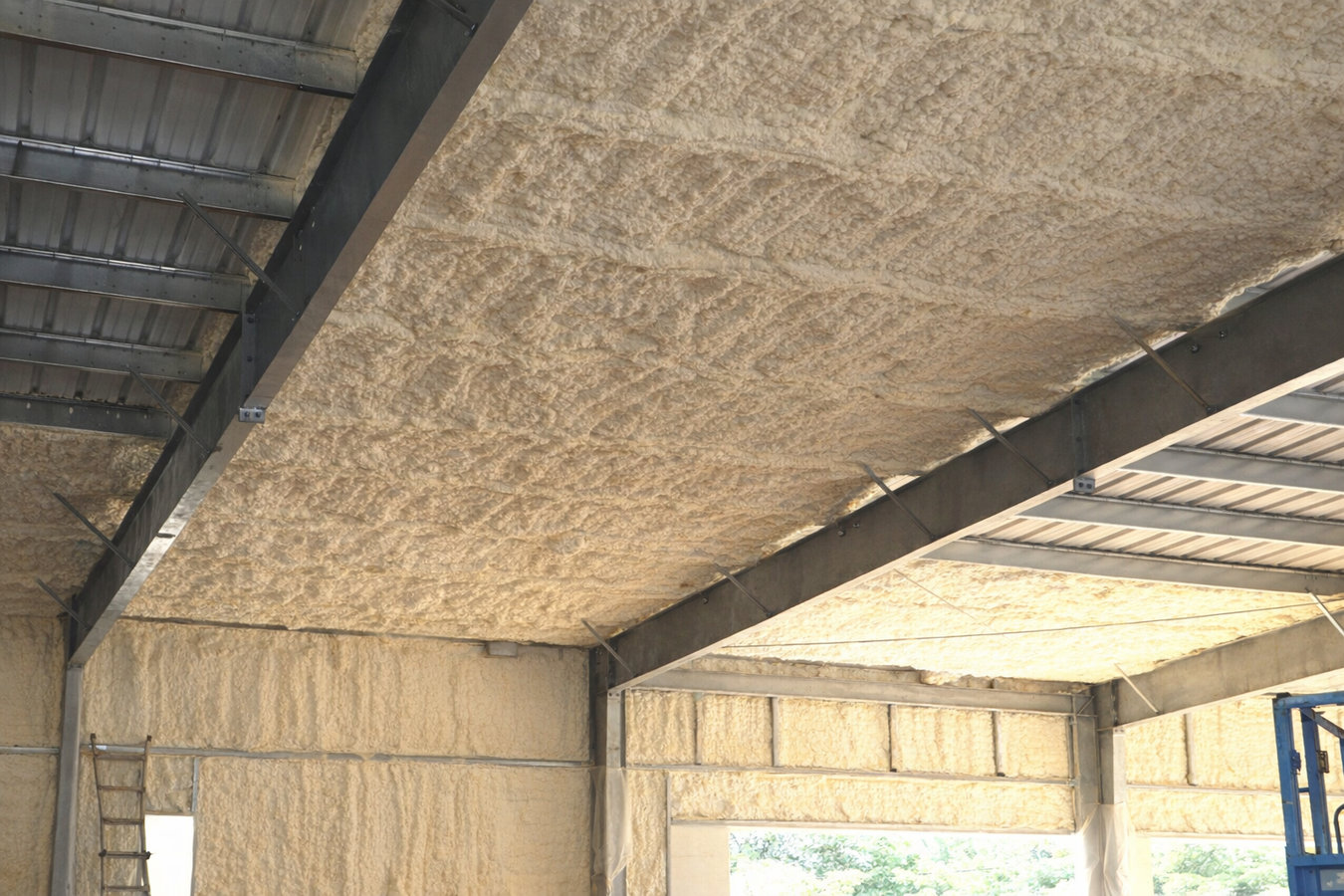
We work with three main insulation types depending on your building's needs. Blown-in loose-fill is well suited for attic and ceiling spaces where material can be distributed through a hose without major structural access. Spray foam is our choice for areas that need both insulation value and a complete air and moisture seal - roof assemblies, wall cavities in high-moisture environments, and around penetrations are common applications. For wall systems and continuous insulation over exterior sheathing, we install rigid board panels that add coverage without occupying interior space. See our wall insulation page for more detail on how we handle existing commercial wall cavities without major demolition.
Every commercial project begins with a free on-site assessment. We walk the building, check walls, the roof or ceiling space, and any areas where heat loss is likely. We identify the highest-priority gaps and give you a written estimate that breaks down scope and cost before any work is scheduled. For projects that require a permit - which is most commercial insulation work in Terre Haute - we handle pulling it and coordinating the final inspection so you do not have to manage that process yourself.
Best for attic and ceiling spaces in commercial buildings - fills gaps and irregular shapes without structural access.
For roof assemblies, wall cavities, and penetrations where both insulation value and an air-moisture seal are required.
Continuous insulation over exterior sheathing or interior wall surfaces - adds coverage without occupying interior space.
For buildings where existing insulation is wet, pest-damaged, or compressed beyond recovery before new material goes in.
Terre Haute's wide temperature swings - summer highs regularly pushing into the 90s and winter lows dropping well below freezing - put constant stress on a building's insulation system. That 100-plus-degree seasonal range means the insulation levels that might be adequate in a milder climate are often not enough here, and cutting corners on coverage shows up quickly on your utility bill. The Wabash River valley location also gives Terre Haute higher average humidity than many Indiana cities, particularly in summer. Moisture is insulation's enemy - it causes certain materials to lose effectiveness, promotes mold growth, and can accelerate structural damage. A contractor working here needs to think about vapor management as part of the plan, not just heat resistance.
We serve commercial properties throughout the region, including businesses in Washington, IN and Vincennes, IN. Duke Energy Indiana, which serves much of the Terre Haute commercial market, has offered rebate programs for businesses that improve their building's energy efficiency - including insulation upgrades. Check with Duke Energy directly before your project starts to see what programs are currently available, and ask us to help you document the work for a rebate application.
We respond within 1 business day. You tell us the type of building, its approximate size, and what is prompting you to call. There is no cost or commitment involved in this first step.
We walk through your building and assess the current state of your insulation - walls, ceiling space, and any areas where heat loss is likely. We tell you what we found and what we recommend.
You receive a written estimate with a full breakdown of scope and cost. For most commercial projects in Terre Haute, we pull the required permit and coordinate the inspection - protecting you if questions arise later.
Most jobs in a standard commercial building are completed in one to three days. Before we leave, we walk you through what was installed and what to expect - including when the inspector will sign off if a permit was pulled.
Free on-site assessment. Written estimate. Permits handled for you.
(812) 251-0473Most commercial insulation projects in Terre Haute require a building permit, and we handle pulling it and coordinating the final inspection. You get documentation showing the work was done correctly - not just our word for it - which matters when you sell, refinance, or deal with an insurance claim.
We work in Terre Haute and across a service area covering 12 cities from Danville, IL to Vincennes, IN. That regional experience means we understand how commercial buildings perform across different building ages, construction types, and local climate conditions.
Terre Haute's Wabash River valley location creates above-average humidity, which affects which insulation materials perform reliably and where vapor management matters most. We select materials and installation approaches with that local condition in mind - not just what works in drier climates.
Duke Energy Indiana has offered rebate programs for commercial energy efficiency upgrades, and we know what documentation is needed to support an application. The Building Performance Institute also provides certification standards that guide how we assess and install to commercial performance benchmarks.Building Performance Institute
Every project we complete comes with a clear record of what was installed and where. Whether you are filing for a Duke Energy rebate, verifying code compliance, or planning a future renovation, that documentation gives you something solid to point to.
High-performance spray foam for commercial buildings that need a tight air and moisture seal alongside insulation value.
Learn moreDense-pack and batt wall insulation for existing commercial structures where exterior wall coverage is thin or missing.
Learn moreTerre Haute heating season fills our schedule quickly - reach out now before the fall rush and lock in your assessment date.